
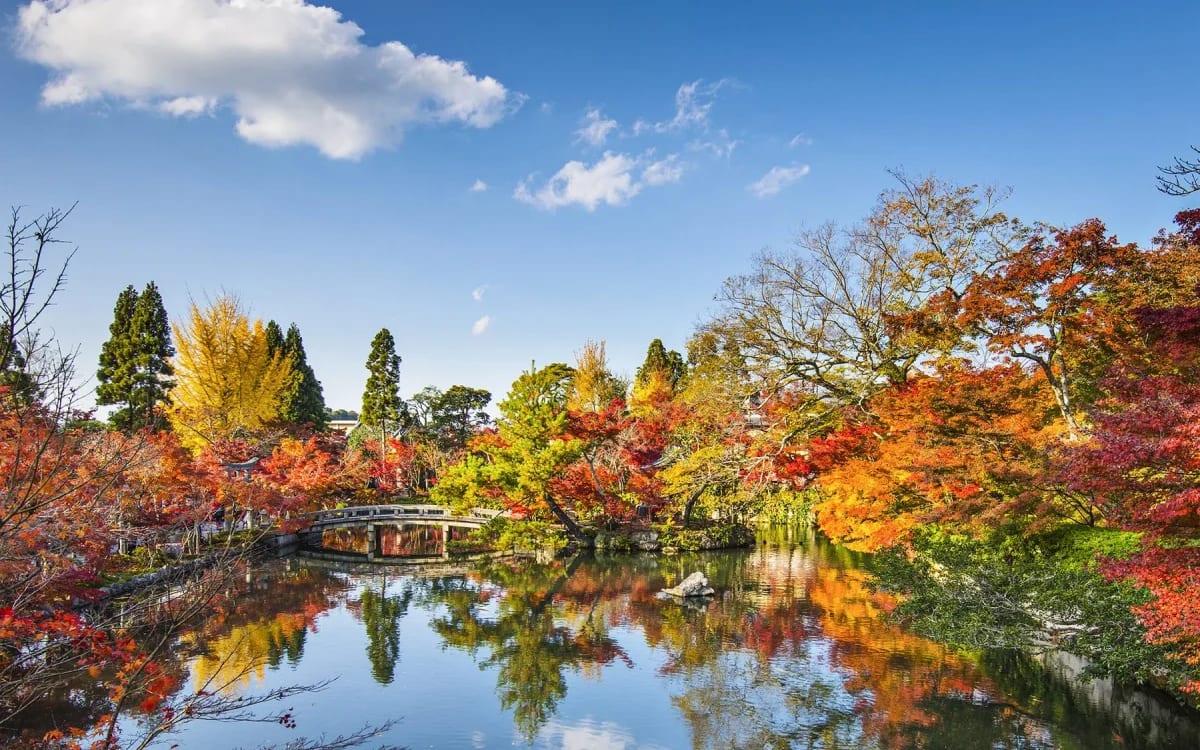
There is no bad time to visit Kyoto — but each season offers a very different city. Spring and autumn bring the famous blossoms and leaves (and the biggest crowds), summer brings festivals and heat, and winter brings quiet temples and crisp blue skies. Here is what our local guides tell travellers about each season.
Spring (March to May): cherry blossoms and fresh green
Kyoto's cherry blossoms usually peak from late March to early April, depending on the weather that year. The Philosopher's Path, Maruyama Park, the Gion Shirakawa canal and the riverside at Arashiyama turn pink, and evening illuminations light up many temples. It is magical — and it is also the busiest and most expensive time of the year, so book hotels and guides early.
May is one of our favourite months: fresh green maple leaves, comfortable temperatures and fewer crowds once the Golden Week holidays (late April to early May) are over. The Aoi Matsuri procession takes place on 15 May.
Early summer (June to mid-July): the rainy season
June brings Japan's rainy season (tsuyu). It does not rain all day every day, but showers are frequent and the air is humid. The upside: lush moss gardens, blooming hydrangeas and noticeably smaller crowds. See our tips on things to do in Kyoto on a rainy day.
Summer (mid-July to August): festivals and heat
Kyoto summers are hot and humid, often well above 30°C. Plan sightseeing for the early morning and evening, and rest in the middle of the day. In return, you get Kyoto's biggest festival — the Gion Matsuri, which fills the whole of July, with its grand float processions on 17 and 24 July — and the Gozan Okuribi on 16 August, when giant bonfire characters are lit on the mountains around the city.
Autumn (October to early December): the maple season
Autumn is many visitors' favourite season. October is pleasant and mild, and from mid-November to early December the maple trees turn brilliant red and gold. Tofuku-ji, Eikando, Kiyomizu-dera and Arashiyama are famous for their colours, and many temples hold special night illuminations. Like cherry blossom season, the peak weeks are very busy — arrive early in the morning to enjoy the gardens in peace.
Winter (December to February): quiet and atmospheric
Winter is Kyoto's quietest season, with cold, mostly dry days and few tour groups. If you are lucky, a light snowfall turns the Golden Pavilion and the temple roofs white — one of the most beautiful sights in Japan. New Year is an important holiday: shrines such as Fushimi Inari and Yasaka are packed with locals, while some shops and restaurants close for a few days.
So, when should you go?
- For the famous scenery: late March to early April (cherry blossoms) or mid-November to early December (autumn leaves).
- For good weather with fewer crowds: May and October.
- For festivals: July (Gion Matsuri) and mid-August.
- For the quietest temples and best value: January and February.
Booking tips for peak seasons
For cherry blossom and autumn-leaf season, book your hotel and guide two to three months ahead if you can — private guides are often fully booked on peak weekends. Whatever the season, the early morning is the best time to visit popular sights; our Early Morning in Kyoto tour is designed to beat the crowds. Not sure when to travel? Tell us about your trip and we will help you choose.