
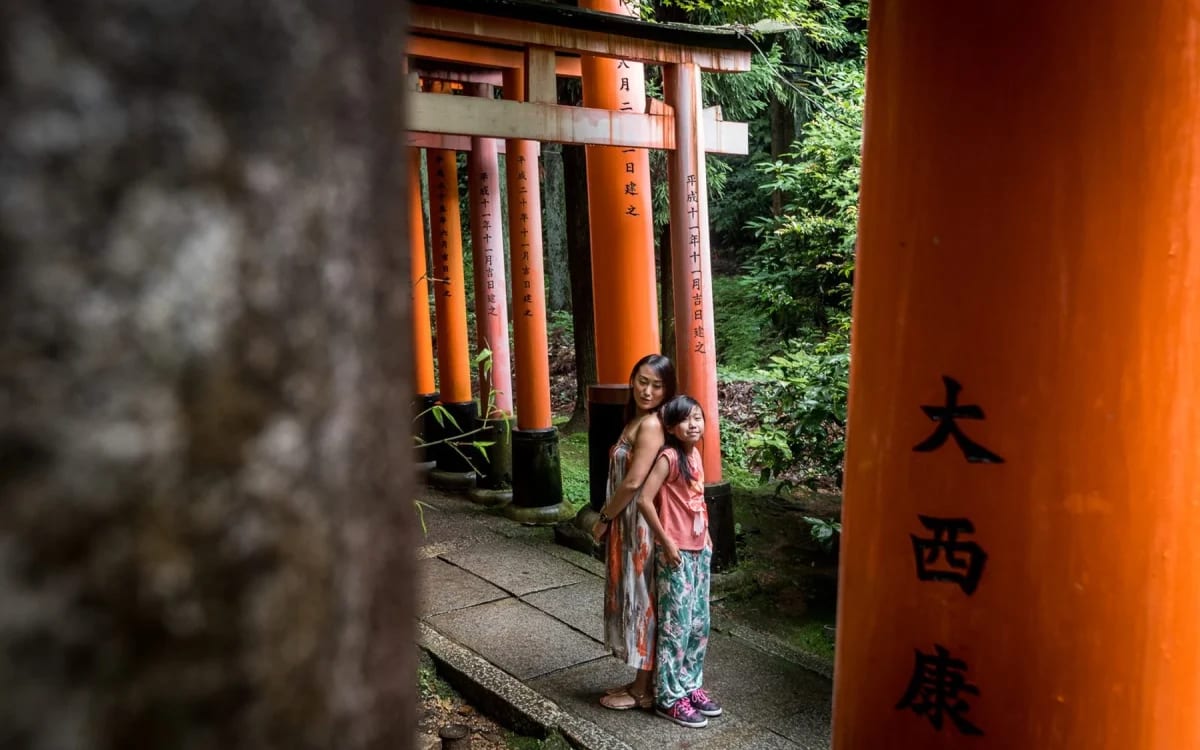
Fushimi Inari Taisha is one of Japan's most iconic sights: thousands of vermilion torii gates winding up a forested mountain in southern Kyoto. It is also one of the busiest. With a little planning, though, you can still enjoy quiet, almost magical moments among the gates. Here is our local guides' advice.
A short history of Fushimi Inari
Fushimi Inari is the head shrine of Inari, the Shinto deity of rice, prosperity and business. Its origins go back to the early 8th century, before Kyoto became Japan's capital. Today there are tens of thousands of Inari shrines across Japan, and this is the most important of them all.
The famous torii gates are donations from companies and individuals hoping for success in business. Look at the back of each gate and you will see the donor's name and the date painted in black. Along the paths you will also spot many stone foxes (kitsune), Inari's messengers, often holding a key to the rice granary in their mouths.
What to see
- The main gate and halls — the bright Romon gate and main shrine buildings at the foot of the mountain.
- Senbon Torii (“thousand torii gates”) — two parallel tunnels of closely spaced gates, the classic Fushimi Inari photo.
- Omokaru-ishi — a pair of stone lanterns where you make a wish and lift the stone on top: if it feels lighter than you expected, your wish will come true.
- Yotsutsuji intersection — about halfway up, with a wide view over Kyoto. A great place to rest or turn back.
- The summit of Mount Inari — at 233 metres, reached by a loop of gates, small shrines and moss-covered stone altars.
How long does it take?
Allow about 1 to 1.5 hours to walk through the Senbon Torii and up to the Yotsutsuji viewpoint and back. The full loop to the summit takes around 2 to 3 hours at a relaxed pace. The path is a steady climb on stone steps, so wear comfortable shoes and bring water in summer.
The best time to beat the crowds
- Go early. The shrine is open 24 hours and free to enter. Before 8:00 AM, the gates are calm and the light is soft — the best time for photos.
- Or go late. Late afternoon and evening are quieter too, and the lantern-lit gates are atmospheric after dark (stay on the main paths and bring a light).
- Keep climbing. Most visitors turn back after the first tunnels of gates. Past the Yotsutsuji intersection, the crowds thin out dramatically.
- Avoid New Year. Fushimi Inari is one of the most visited shrines in Japan during the first days of January.
How to get there
JR Inari Station is right in front of the shrine entrance, just two stops (about five minutes) from Kyoto Station on the JR Nara Line. Fushimi-Inari Station on the Keihan Line is a short walk away. Because it sits on the Nara Line, Fushimi Inari is easy to combine with a trip to Nara on the same day.
Etiquette at the shrine
- Bow once before passing through the main torii gate, and walk to the side of the path — the centre is said to be for the deity.
- Rinse your hands and mouth at the purification fountain (temizuya) before visiting the main hall.
- Keep the paths clear when taking photos, and never climb on or lean against the gates.
Visit with a local guide
Our Early Morning in Kyoto tour starts at Fushimi Inari before the crowds arrive, and our Fushimi Inari & Nara Day Tour combines the shrine with Nara's Great Buddha and friendly deer. Your guide will share the stories behind the gates — and the best photo spots.