
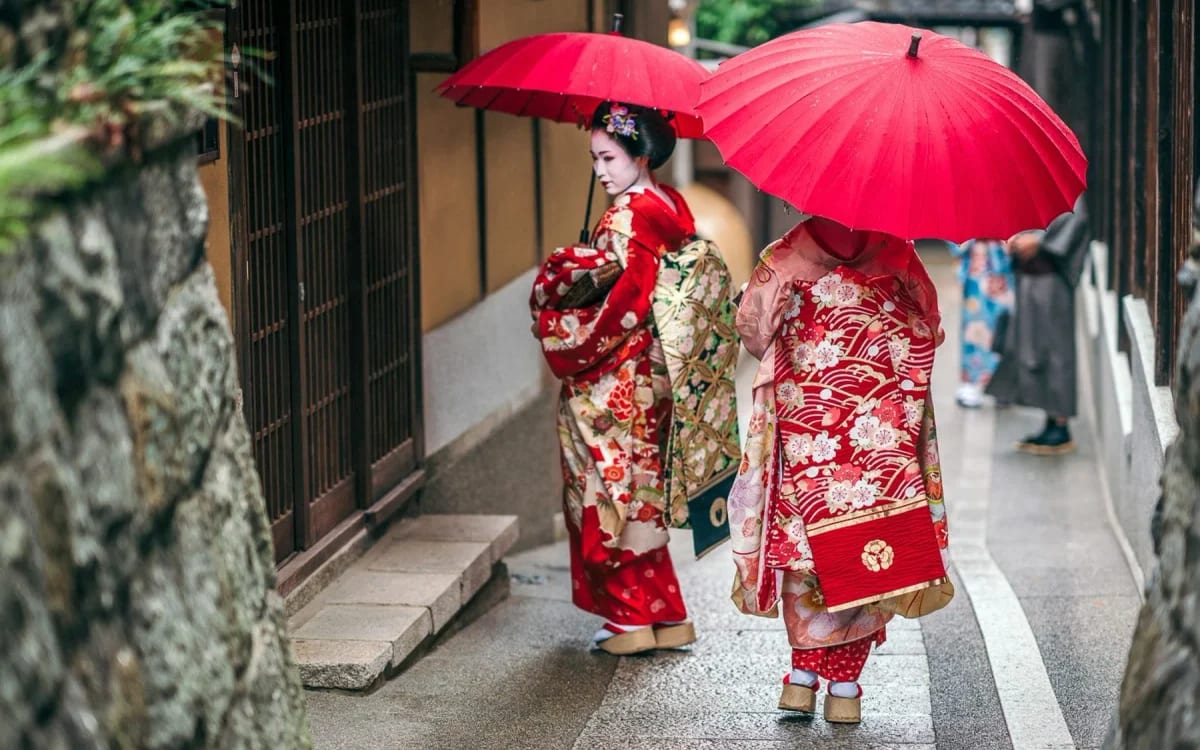
Gion is Kyoto's most famous geisha district: wooden teahouses, lantern-lit lanes and, if you are lucky, a glimpse of a geiko or maiko on her way to an evening appointment. It is also a living neighbourhood where people work and live — and in recent years, overcrowding has led to new rules for visitors. Here is how to enjoy Gion respectfully.
Geiko, maiko and geisha: what is the difference?
In Kyoto, professional geisha are called geiko. Maiko are apprentices, usually in their late teens, who train for several years in dance, music, conversation and etiquette. You can usually tell them apart by their appearance: maiko wear long, trailing obi sashes, colourful kimono, elaborate hair ornaments and tall wooden okobo sandals, while geiko dress more simply and elegantly.
Where to walk in Gion
- Hanamikoji Street — the main street of the Gion Kobu district, lined with traditional teahouses (ochaya) and restaurants.
- Shirakawa canal — a willow-lined canal and stone path, especially beautiful at cherry blossom time and in the evening.
- Yasaka Shrine — the bright vermilion shrine at the east end of Shijo Street, Gion's spiritual heart.
- Kennin-ji — Kyoto's oldest Zen temple, a peaceful escape just south of Hanamikoji.
- Pontocho — a narrow lantern-lit alley across the river, another historic geiko district full of restaurants.
Etiquette rules every visitor should know
- Never chase, block or touch a geiko or maiko. They are usually on their way to work and cannot be late. Step aside and let them pass.
- Do not take photos without permission. Taking pictures of people at close range without asking is considered rude in Japan, and photography is banned in some parts of Gion.
- Stay out of private lanes. Since 2024, several private lanes off Hanamikoji Street have been closed to tourists, and signs warn that visitors who enter them may be fined. Look out for the signs and respect them.
- Do not enter teahouses uninvited. Ochaya are private establishments that welcome guests only by introduction.
- Keep your voice down, avoid eating while walking and take your rubbish with you. Remember that this is a residential neighbourhood.
When are you most likely to see a maiko?
Early evening is when geiko and maiko make their way to their appointments, but there is no guarantee — and it is not a show. Instead of waiting on a street corner, enjoy the atmosphere of the district and consider a cultural experience where meeting a geiko or maiko is part of the programme.
The best ways to meet a geisha
- Dinner or tea with a maiko — several organisations arrange evenings where you can talk with a maiko, watch a dance and play traditional games.
- Traditional performances — Gion Corner presents short shows of traditional Japanese arts, and each spring the geiko districts hold public dance performances such as the Miyako Odori.
- A guided walk — a local guide can explain the history and customs of the hanamachi (geisha districts) and show you the best places to visit without disturbing residents.
Explore Gion with a local guide
On our private Gion Geisha District Night Tour, your guide leads you through the lantern-lit lanes, explains the world of geiko and maiko, and makes sure you enjoy Gion respectfully. It is an ideal way to end a day in Kyoto — see our one-day Kyoto itinerary for how to fit it in.